Integrating AI into your existing software: a practical guide for SMEs
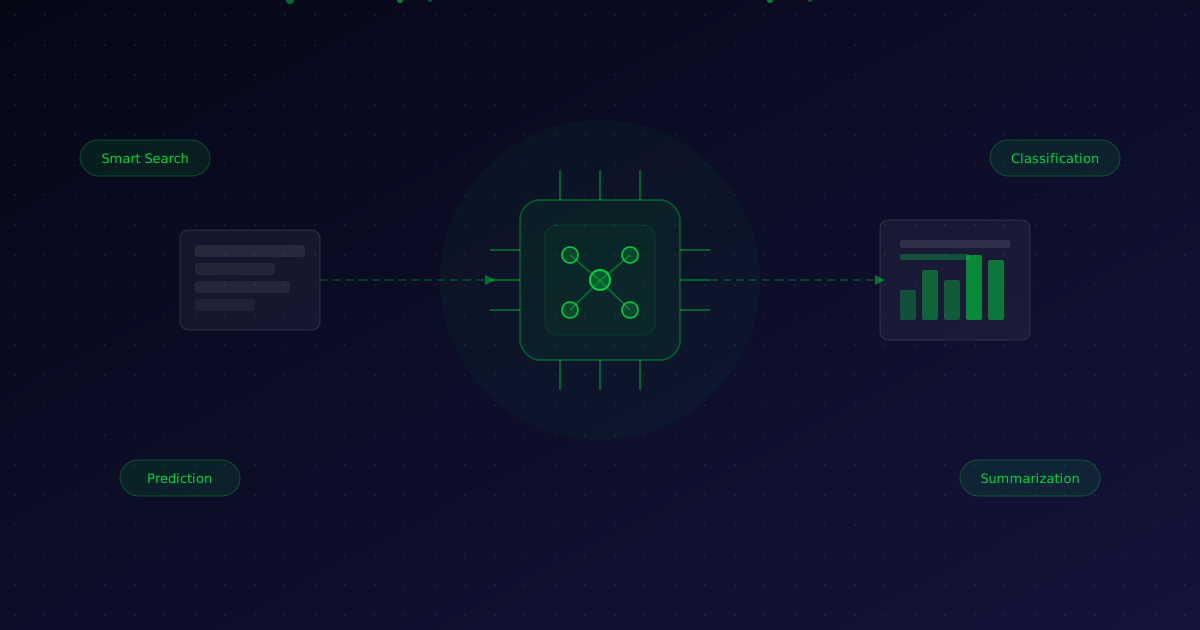
Artificial intelligence is no longer reserved for tech giants with unlimited budgets. Thanks to accessible APIs and cloud services, SMEs can also leverage AI to work smarter, make better decisions and serve their customers better. But where do you start? And how do you integrate AI into software that's already running?
AI is not a replacement, but an enhancement
A common misconception is that AI requires a complete overhaul of your software. In practice, it's often about targeted additions to existing systems. Think of:
- Smart search: a search bar that understands what the user means, not just exact word matching
- Automatic classification: automatically categorizing and routing incoming messages, tickets or documents
- Predictive analytics: recognizing patterns based on historical data — such as customer churn, stock shortages or peak periods
- Text generation and summarization: drafting reports, emails or product descriptions based on structured data
Three approaches to adding AI
1. Integrating external AI APIs
The fastest way to add AI functionality is through existing APIs. Services like the Anthropic API (Claude), OpenAI or Google Cloud AI offer ready-made models that you can call through a simple API request.
// Example: document classification via an AI API
$response = $client->request('POST', 'https://api.anthropic.com/v1/messages', [
    'json' => [
        'model' => 'claude-sonnet-4-20250514',
        'max_tokens' => 256,
        'messages' => [
            [
                'role' => 'user',
                'content' => "Classify this message into one of these categories:
                    [invoice, complaint, information request, order].
                    Message: {$document->getContent()}"
            ]
        ]
    ]
]);
Advantage: quick to implement, no ML expertise needed. Consideration: you're sending data to an external service — check if this fits within your GDPR policy.
2. Running pre-trained models locally
For sensitive data or high volumes, you can host open-source models locally. Frameworks like Ollama or vLLM make it easy to run models on your own infrastructure.
Advantage: full control over data. Consideration: requires GPU capacity and technical management.
3. Training custom models
When your use case is very specific, it may be worthwhile to fine-tune a model on your own data. This gives the best results but requires more investment in data preparation and expertise.
Advantage: maximum accuracy for your domain. Consideration: higher initial investment and maintenance.
Concrete use cases for SMEs
Improving customer service
An AI chatbot that answers frequently asked questions based on your knowledge base. Not as a replacement for human contact, but as a first line that handles simple questions and routes complex ones to the right employee — including a summary of the problem.
Automating document processing
Invoices, quotes and contracts arriving as PDF or email: AI can extract the relevant data, classify it and enter it into your system. What takes an employee 15 minutes per document, AI does in seconds.
Smarter reporting
Instead of manually compiling dashboards and reports, AI can flag trends and anomalies in your data. "Revenue in the West region is down 12% compared to last quarter — this is mainly due to three inactive clients."
Pitfalls to avoid
- Starting too big: begin with one concrete use case, measure the results, then expand
- Ignoring data quality: AI is only as good as the data it receives — invest in clean, structured data first
- No human oversight: use AI as a tool, not an autonomous decision-maker — especially for critical processes
- Forgetting GDPR: map out which data you share with external AI services and document this in your processing register
How do we approach this?
At Zodi Innovations, we guide SMEs in identifying the right AI applications and integrating them into existing software. Our process:
- Analysis: we map your processes and identify where AI has the most impact
- Proof of Concept: we build a working prototype to prove feasibility and value
- Integration: we build the solution into your existing application, with attention to performance, security and scalability
- Monitoring: we measure the results and adjust where needed
AI is not a goal in itself, but a means to make your software smarter and your employees more productive. Curious what AI can mean for your business? Get in touch for a no-obligation conversation.
Recent articles
Insights, best practices and technical depth from our team.
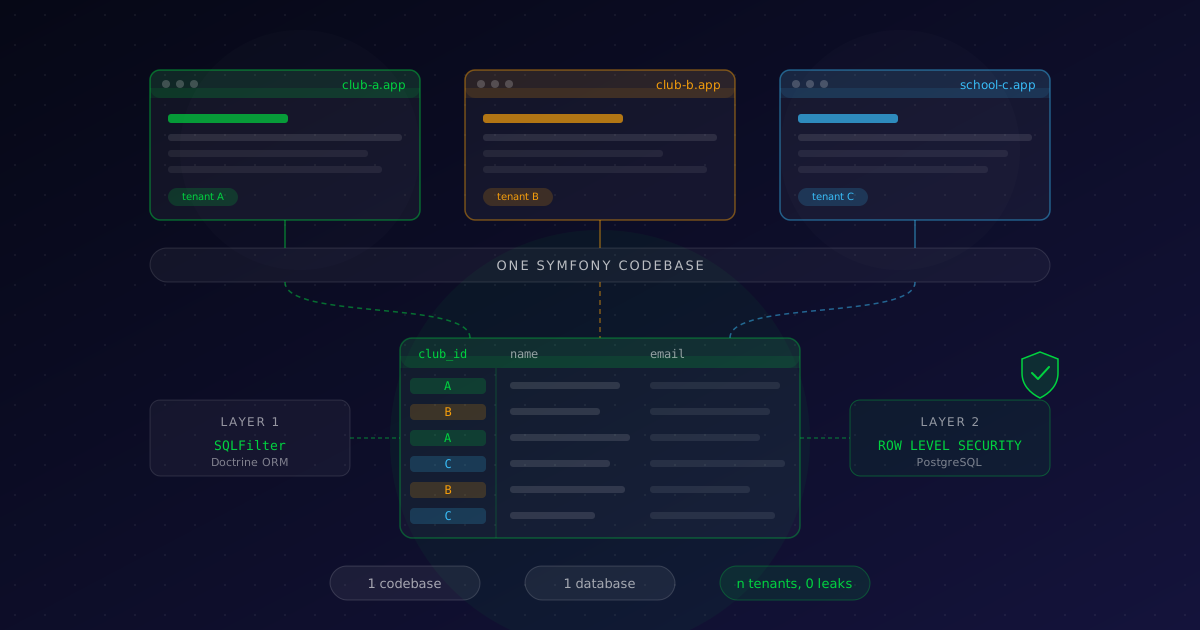
Multi-tenancy in Symfony and PostgreSQL: one codebase, one database, strictly isolated tenants
LedenAdmin, ShootWise and SchoolWise each run on a single codebase and a single database, yet no customer may ever see another customer's data. A deep dive into how we enforce that: from the data model and Doctrine filters to PostgreSQL Row-Level Security, Messenger and tests.
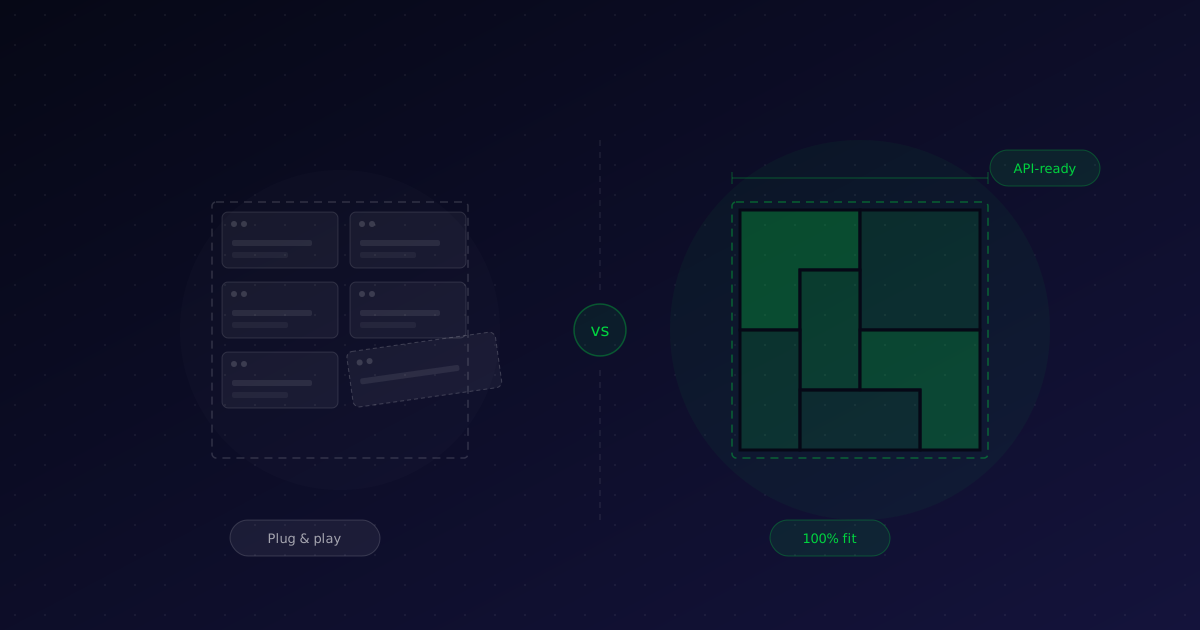
Custom software or off-the-shelf: how do you choose?
Buy an off-the-shelf package or have software built to measure? It is one of the most important IT decisions for an SME. We offer an honest decision framework — with examples from our own practice.