Symfony 8 has officially been released and brings a series of innovations that fundamentally improve the way we build PHP applications. As a team that works with Symfony daily on custom software and SaaS platforms, we are particularly excited about this release. In this article, we discuss the most important changes.
Improved Performance
The new version contains significant performance improvements in the HTTP kernel and routing system. Benchmarks show that request handling is up to 30% faster compared to Symfony 7. This is due to a completely rewritten router that uses optimized data structures.
Additionally, the dependency injection container has been further optimized. Lazy loading of services is now the default, meaning only services that are actually used are initialized.
Native TypedProperty Support
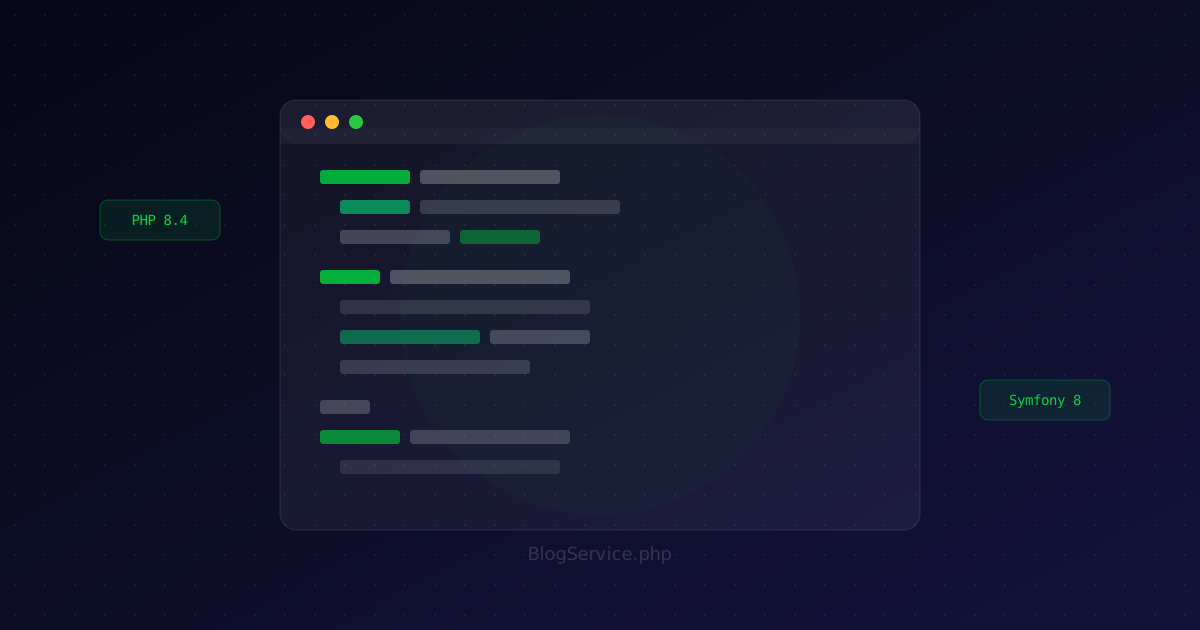
Symfony 8 fully leverages PHP 8.4 features. Property hooks are now natively supported in the Form and Serializer components. This makes code more compact and readable:
class Product
{
    public string $name {
        set(string $value) => ucfirst($value);
    }
    public float $price {
        set(float $value) => round($value, 2);
    }
}
New AssetMapper Ecosystem
The AssetMapper system has been extended with a plugin architecture. Third-party JavaScript libraries can now be integrated more easily without Webpack or Encore. This significantly simplifies the frontend setup for projects that don’t need a complex build pipeline.
Improved Developer Experience
The Symfony Profiler has received a complete redesign with a modern, clear dashboard. New panels for query analysis, cache statistics and performance profiling make debugging easier than ever.
The maker bundle now also generates default tests when creating controllers and services, encouraging Test-Driven Development.
Scheduler Component Improvements
The Scheduler component, introduced in Symfony 6.3, has matured further in version 8. Support for distributed locks, retry mechanisms and a visual dashboard make it a full-fledged alternative to cron jobs and external queue systems.
What does this mean for your project?
If you are currently running Symfony 6 or 7, an upgrade to Symfony 8 is definitely worth it. The performance improvements alone justify the investment. The Symfony team provides comprehensive migration guides and backward compatibility is — as usual — excellent.
At Zodi Innovations, we help clients plan and execute framework upgrades. Get in touch if you want to know what Symfony 8 can do for your project.