Custom software or off-the-shelf: how do you choose?
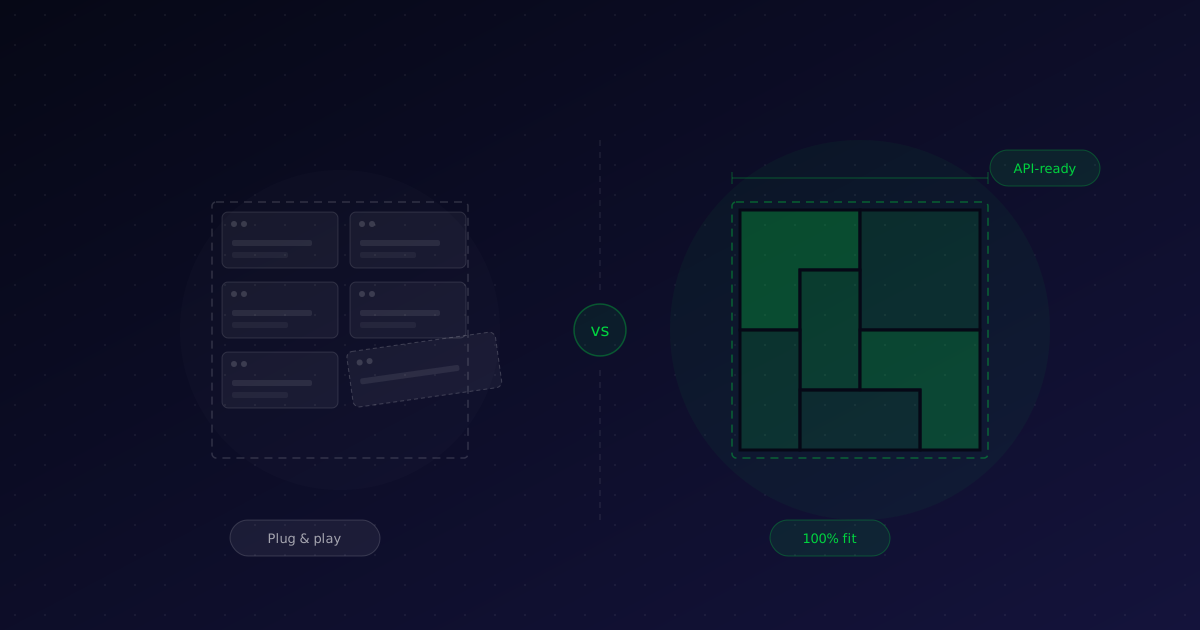
Sooner or later, every growing organization hits the limits of its software. The package that sufficed for years starts to pinch: processes no longer fit the available screens, employees turn to Excel to fill the gaps, and every report requires manual copy-and-paste work. That is the moment the question arises: do we buy a (new) off-the-shelf package, or do we have software built to measure?
In our article on SaaS, we already touched on it: standard software is not the best choice for every situation. But neither is custom software. In this article, we offer an honest decision framework — including the cases where you are better off not building custom.
The difference in a nutshell
An off-the-shelf package is ready-made software built for a broad audience. You pay a license or subscription, configure the package within the options the vendor provides, and can often get started within days.
Custom software is built around your processes. Your company does not adapt to the software — the software adapts to your company. That requires a larger initial investment, but delivers a solution that does exactly what you need — and evolves with you.
When an off-the-shelf package is the right choice
Let's start with an honesty you might not expect from a custom software builder: for many processes, an off-the-shelf package is simply the best option.
Accounting, email marketing, HR administration, calendar management: these are processes that work almost identically at thousands of companies. Excellent standard software exists for them, at a price no custom project can compete with. Moreover, the industry knowledge of hundreds of customers is baked into those packages.
The rule of thumb is simple: if the process does not differentiate your business, buy a package. Organizing your accounting differently from your competitor gains you nothing.
When custom software pays off
Your process IS your competitive advantage
Some companies win customers precisely because they work differently: faster delivery, more flexible planning, more transparent communication. Forcing such a distinctive process into a standard package flattens it to the industry average. Custom software strengthens what you do differently, instead of normalizing it away.
The workarounds keep piling up
A telltale sign: alongside the official package, Excel files, shared folders and manual lists circulate to handle everything the package cannot do. Every workaround means double data entry, error-proneness and knowledge that lives in people's heads instead of in systems. Add up the hidden hours and the risks, and the business case for custom software often turns positive faster than expected.
You need integrations
Modern businesses run on multiple systems that need to talk to each other: your planning with your invoicing, your webshop with your inventory, your customer portal with your accounting. Standard packages sometimes offer integrations, but rarely exactly the ones you need. Custom software is built with those integrations as a starting point.
License costs grow with you
Standard packages typically charge per user per month. With ten employees, that is manageable; with fifty, it becomes a serious annual cost — for software that still does not fit perfectly. Custom software is yours: no per-user licenses, no price increases from a vendor you cannot work around.
Three examples from our practice
Fluentes, a precious metal foundry from Antwerp, works with metal accounts: customers deposit gold or silver and later withdraw it in a different form. No standard ERP knows that concept. We built a custom ERP with a customer portal and iPad apps for the workshop, designed exactly around that process.
Van Cauwenbergh Transport needed to connect digitally with the systems of large clients via EDI. Standard transport software did not support those specific integrations. Their custom platform now processes transport requests automatically, all the way to the digital CMR in the driver app.
Transmoove supports moving companies with crew scheduling where shifts can be split across multiple job sites, and warehouse management across multiple locations. Too specific for generic planning tools — exactly why it was built as a custom platform.
An honest look at the costs
Custom software requires a higher initial investment, no question. But compare over a five-year period:
- Off-the-shelf package: per-user licenses × number of employees × 60 months, plus the hidden cost of workarounds, double data entry and processes you adapt to fit the software
- Custom software: one-time build cost plus maintenance, no user licenses, and software that accelerates your process instead of slowing it down
For generic processes, the standard package wins that calculation by a wide margin. For core processes with many users and many workarounds, the balance tips toward custom surprisingly quickly. Always make the calculation for your specific situation — a five-year Total Cost of Ownership says more than the entry price.
The hybrid approach
In practice, the best solution is rarely black and white. Many of our clients combine both: standard packages for generic processes like accounting, and custom software for the core processes that set them apart — connected via APIs, so data flows automatically and nobody has to enter anything twice.
Five questions to guide your choice
- Does this process differentiate my business? If not: off-the-shelf.
- How many workarounds does my team use today? Count the Excel files alongside your current software.
- Which systems need to talk to each other? The more integrations, the stronger the case for custom.
- What will licenses cost over five years, accounting for growth? Compare that amount with a custom project.
- Does a standard package cover at least 80% of my needs? And is the missing 20% a side issue — or the very core of your operation?
Honest advice, no sales pitch
At Zodi Innovations, we start every project with an analysis of your processes — and sometimes our conclusion is that an off-the-shelf package serves you better. That advice is just as free of obligation. But if your growth is stuck in software that does not fit, we would love to show you what custom-built software can mean for your business. Get in touch for a no-obligation conversation.
Recent articles
Insights, best practices and technical depth from our team.
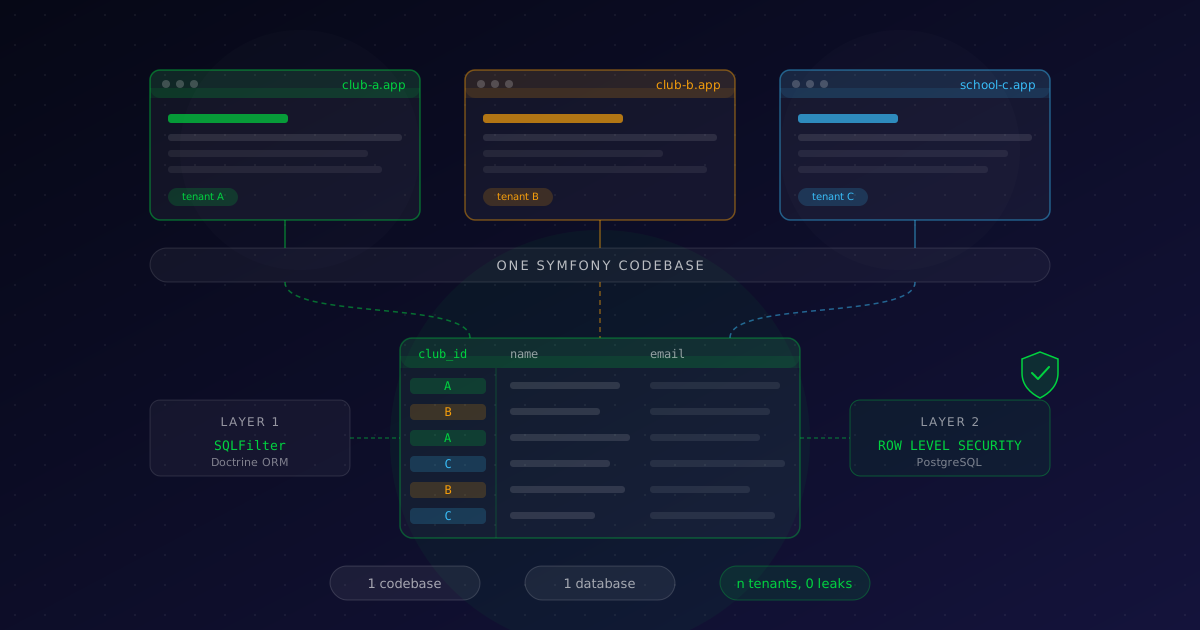
Multi-tenancy in Symfony and PostgreSQL: one codebase, one database, strictly isolated tenants
LedenAdmin, ShootWise and SchoolWise each run on a single codebase and a single database, yet no customer may ever see another customer's data. A deep dive into how we enforce that: from the data model and Doctrine filters to PostgreSQL Row-Level Security, Messenger and tests.
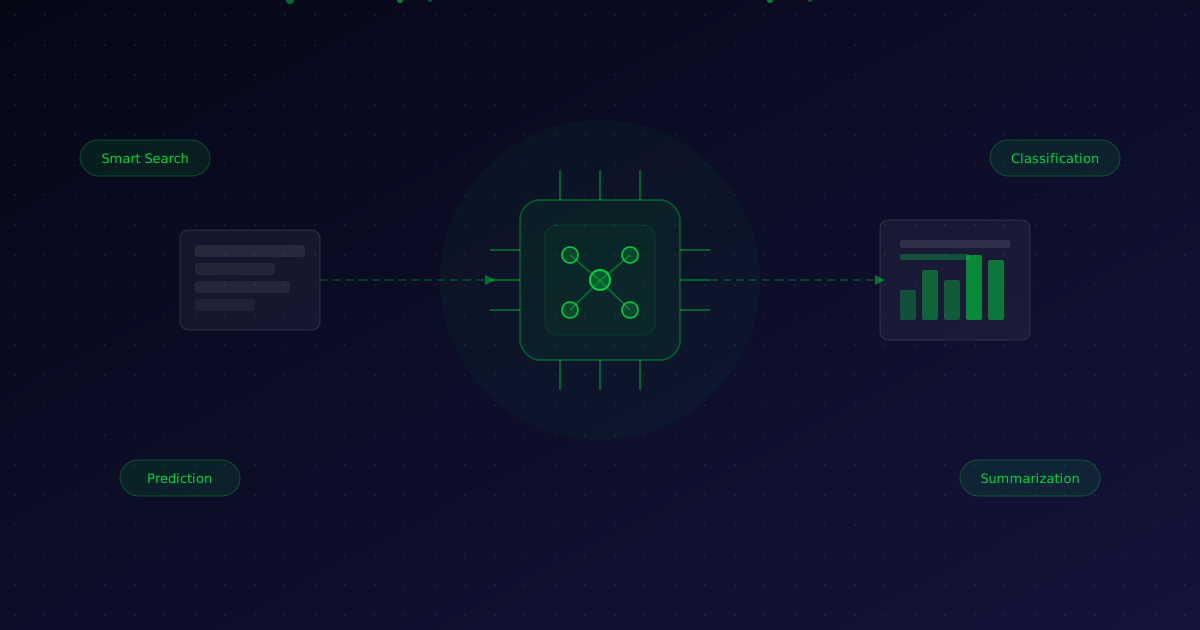
Integrating AI into your existing software: a practical guide for SMEs
AI doesn't have to be science fiction. We show how SMEs can practically implement artificial intelligence in their existing applications — without rebuilding everything.