“What does it cost?” is the first question in almost every conversation about custom software, and rightly so. The honest answer is: it depends on what you need. That sounds evasive, so in this article we make it concrete. You will read which factors drive the price, which costs are often overlooked and how to keep the budget under control.
You won’t find a price list here: no two projects are alike. But after reading, you will know where a quotation comes from, and which questions to ask to compare quotations fairly.
Why there is no standard price
Custom software is built around your processes. The price therefore follows from the time it takes to analyze those processes, build them, test them and take them into production. That time depends on the scope and complexity of what you ask for, not on a fixed package.
A price without an analysis is always a guess. A reliable quotation starts with a conversation about how you work today, where things get stuck and what the software needs to solve. Only then can the scope be defined and the work estimated.
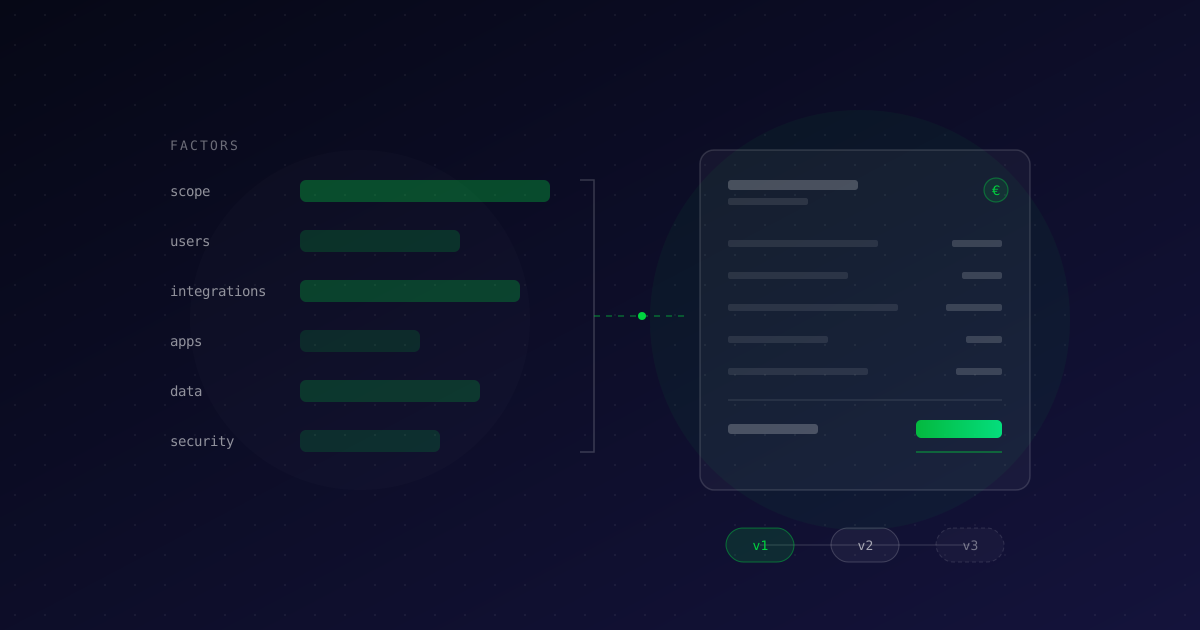
Six factors that drive the price
1. How many processes the software supports
The most important factor is scope: how many processes, screens and exceptions does the software need to handle? A tool that digitizes one process, such as following up on requests, is a different project from a complete ERP for orders, planning, inventory and invoicing.
Exceptions in particular add up. The standard path is rarely where most of the work is; the edge cases are. An order that changes halfway, a client with different terms, a shift that gets split: every scenario has to be designed, built and tested.
2. Who uses the software
Every group of users gets its own screens and its own permissions. An internal tool for ten employees is simpler than a platform that clients, suppliers and drivers also log in to. At Van Cauwenbergh Transport, planners, clients and drivers each work with their own part of the same platform: a planning tool, a client portal and a driver app.
3. Integrations with other systems
Software that talks to your accounting, your payment provider or your clients’ systems saves a lot of manual work later. But every integration requires agreements on the format, error handling and tests with the other party. At Fluentes, invoicing and accounting run fully automatically; at Van Cauwenbergh, suppliers send their requests through EDI. Those are the parts that deliver the most, and also the parts that take time.
4. Apps alongside the web application
A web application works on any device with a browser. If you also need apps, for example for tablets on the shop floor or phones on the road, development and testing work is added. At Fluentes, the workshop uses iPad apps that update orders in real time.
5. Existing data and software
If you are not starting from scratch, your existing data has to come along. Clients, orders, history: they need to be cleaned up, converted and checked. For Transmoove, we first analyzed the existing software, so the new platform fits the way the team already worked.
6. Requirements for security, availability and regulation
Software that processes personal data must comply with the GDPR. Software that always needs to be available requires monitoring, backups and an infrastructure that absorbs failures. And some industries have legal requirements, such as the digital shooting register in Shootwise. The higher the requirements, the more work goes into design and testing.
The costs that are often forgotten
A quotation for the build is not the full cost. Also count on:
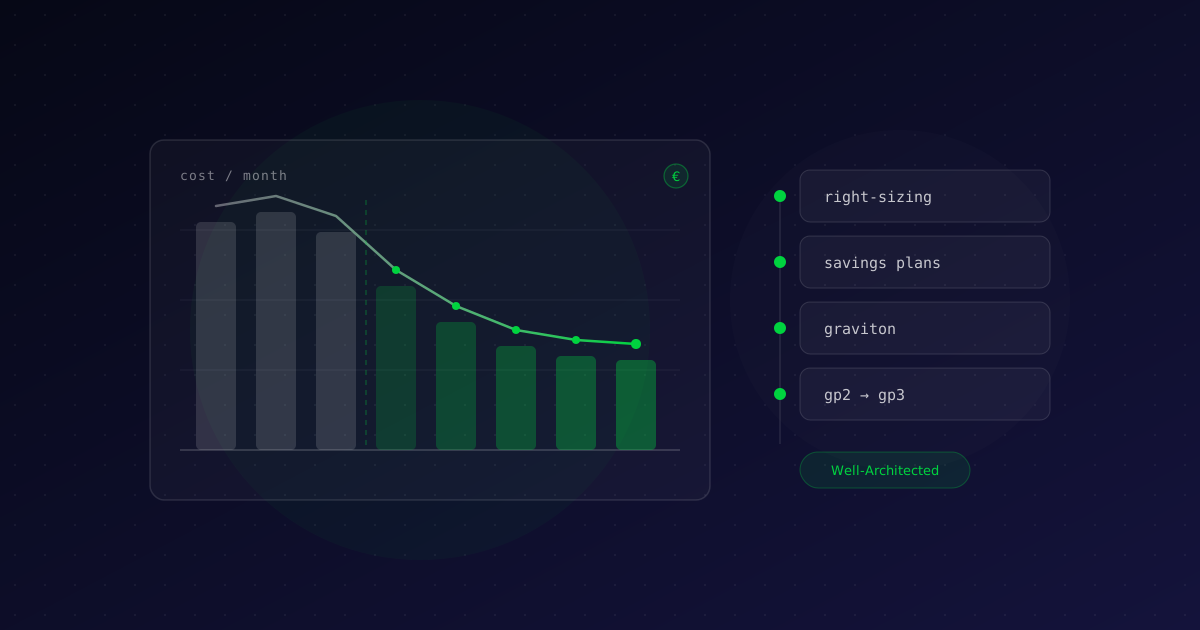
- Hosting and operations. Software runs on servers that need to be monitored, updated and backed up. You can arrange that yourself or outsource it, for example through DevOps as a Service.
- Maintenance. Frameworks, libraries and operating systems receive updates, including security updates. Software nobody maintains goes stale. Our article on Symfony 8 explains why upgrading on time pays off.
- Further development. After go-live, new wishes come up. That is a good sign: the software is being used. Plan a budget for it.
- Your own time. Someone on your side decides on priorities, tests interim versions and gives feedback. That involvement is part of what makes a project succeed.
How to keep the budget under control
Start with an analysis
First map out what the software needs to do, for whom, and what matters most. A good analysis prevents surprises halfway through and results in a quotation with a clear scope, schedule and budget.
Start with the core
Don’t build everything at once. Start with the process that costs the most time or causes the most errors today. A first working version is usually ready within a few weeks to months, depending on the scope. You see results quickly and decide what comes next based on real use.
Work in iterations with demos
Short development rounds with regular demos keep you in control. You see what is being built along the way and can adjust before time is lost on something you meant differently.
Compare the total cost over several years
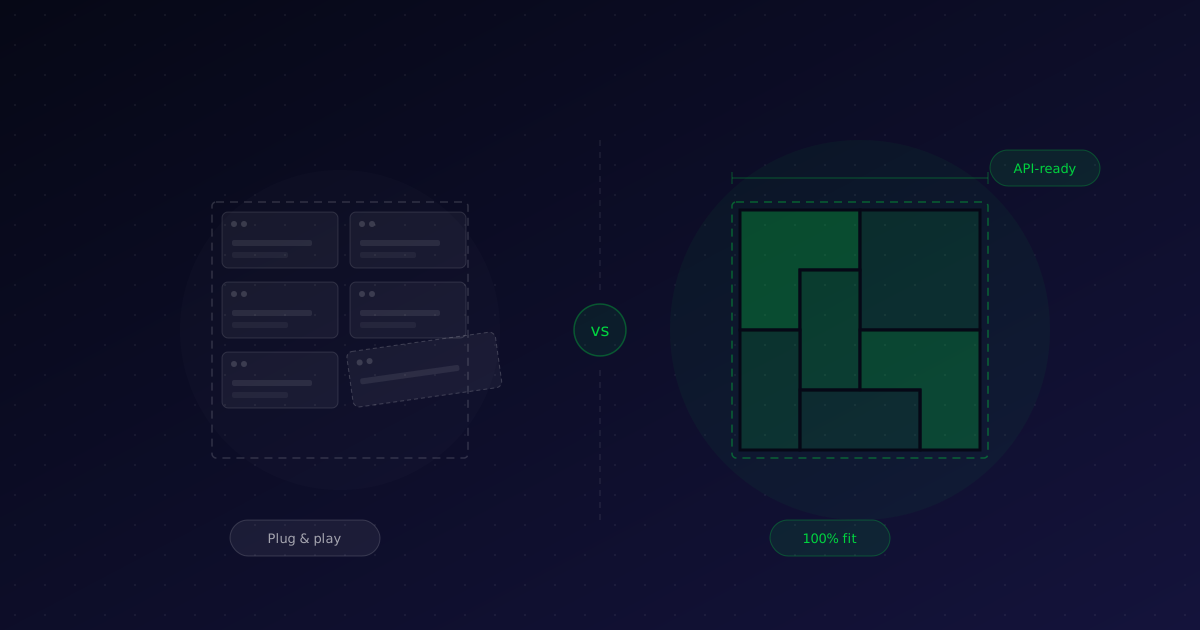
Don’t just compare the build cost with the price of a package. Add up per-user licenses, workarounds and double data entry over several years. In our article Custom software or off-the-shelf we do that calculation, including the cases where a package is the better choice.
Five questions to compare quotations
- What exactly is in the scope, and what isn’t? A low price with a vague scope is not a low price.
- Who owns the source code after delivery? With us, you do, without vendor lock-in.
- What happens after go-live? Who hosts, monitors and maintains the software, and on what terms?
- How does the builder handle changes? New insights during a project are normal. Ask how they are scheduled and budgeted.
- Which comparable projects have already been delivered? Ask for cases from your industry. You can find ours under transport and logistics and manufacturing, among others.
A quotation that fits
At Zodi Innovations, every project starts with a no-obligation analysis. You then receive a quotation with a clear scope, schedule and budget, and we work in iterations so you see results early and costs stay under control. Curious what your project would cost? Discover our approach to custom software or get in touch.